

ISSUE 008
IN SITU this week discusses why third places are actually number one, and why we need to accept brand collaborations for what they are - expected.

IN SITU is a platform dedicated to the intersection between culture, brand strategy and music. Sometimes the focus will be on one strand more than another, but always sitting in that sweet spot.
ISSUE 008 AT A GLANCE
LONG READ Cultural observation opinion piece: Why the third place has become number one
VERBATIM Quote from cultural tastemaker: Stephan Ledain - Founder of Eternal Remedy, and business psychologist
SHORT READ Belief relating to strategy and/or insight: Core belief #8: Brand collabs aren’t saturated, they are the status quo
MUSIC CORNER Album recommendation: Dua Saleh - I SHOULD CALL THEM
LONG READ
WHY THE “THIRD PLACE” HAS BECOME NUMBER ONE
Originally defined as a space that was neither the home nor workplace, a ‘third place’ has become much more than that. It’s importance has gone beyond a place to escape the two main spheres of life, and has become something - whether in person or online - where we are finding much needed comfort and connection.
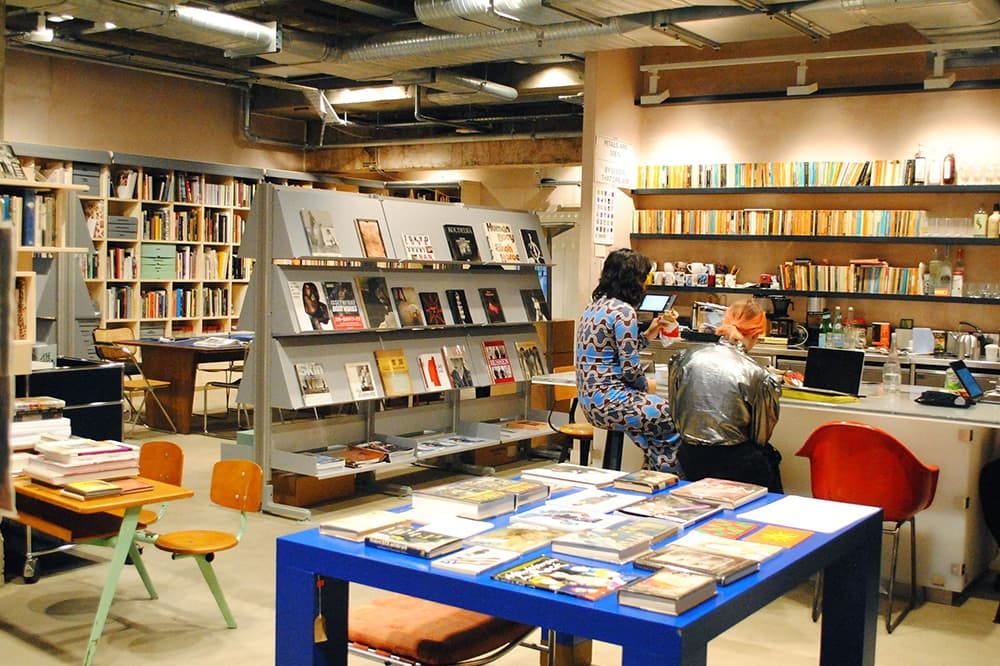
There are a combination of factors as to why this weight on third places has increased, such as not being in the present due to our phones (and therefore missing possible connections), lack of funding closing down venues such as community centres, and the fall in organised religion in the West leading to places of worship closing too. The pandemic has played a role of course, causing us to nest deep into our homes, getting used to working remotely, and losing some of the muscle memory it takes to socialise and try new things. This has caused a perfect storm of third places being in high demand and of low supply.
Basic economics will tell you that the third places we do have are therefore of higher value. The visionaries among us have cottoned on and created third places 2.0: spaces, places and forums that bring together people who are looking for something more. Whether it be physically or mentally stimulating, there are now plenty of examples beyond pubs, cafes and clubs where we can potentially learn something new and meet people.
Below is a rudimentary table showing the various types of London third places I’ve noticed in recent months - with ‘format’ down the side, and ‘purpose’ across the top. Each sub-category includes an example with their Instagram handle, so you can see for yourself what they’re all about.
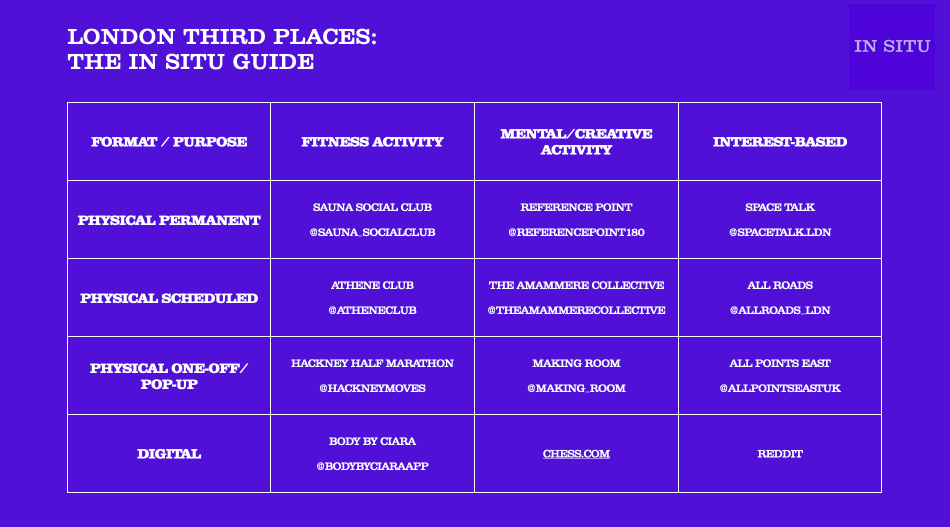
Even from this overview of London, one can see how varied the options are. From saunas to listening rooms, reference libraries to book clubs, half marathons to music festivals, there really is something for everyone. But are these all skewing towards a younger generation who prefer to make collages than down pints in the pub? Arguably it’s the youth who need these spaces more, especially once they’ve graduated formal education and perhaps moved away from home. They are lacking a solid support system, and if they’re not meeting friends on the dancefloor or at work, then it makes sense to seek like-minded people elsewhere.
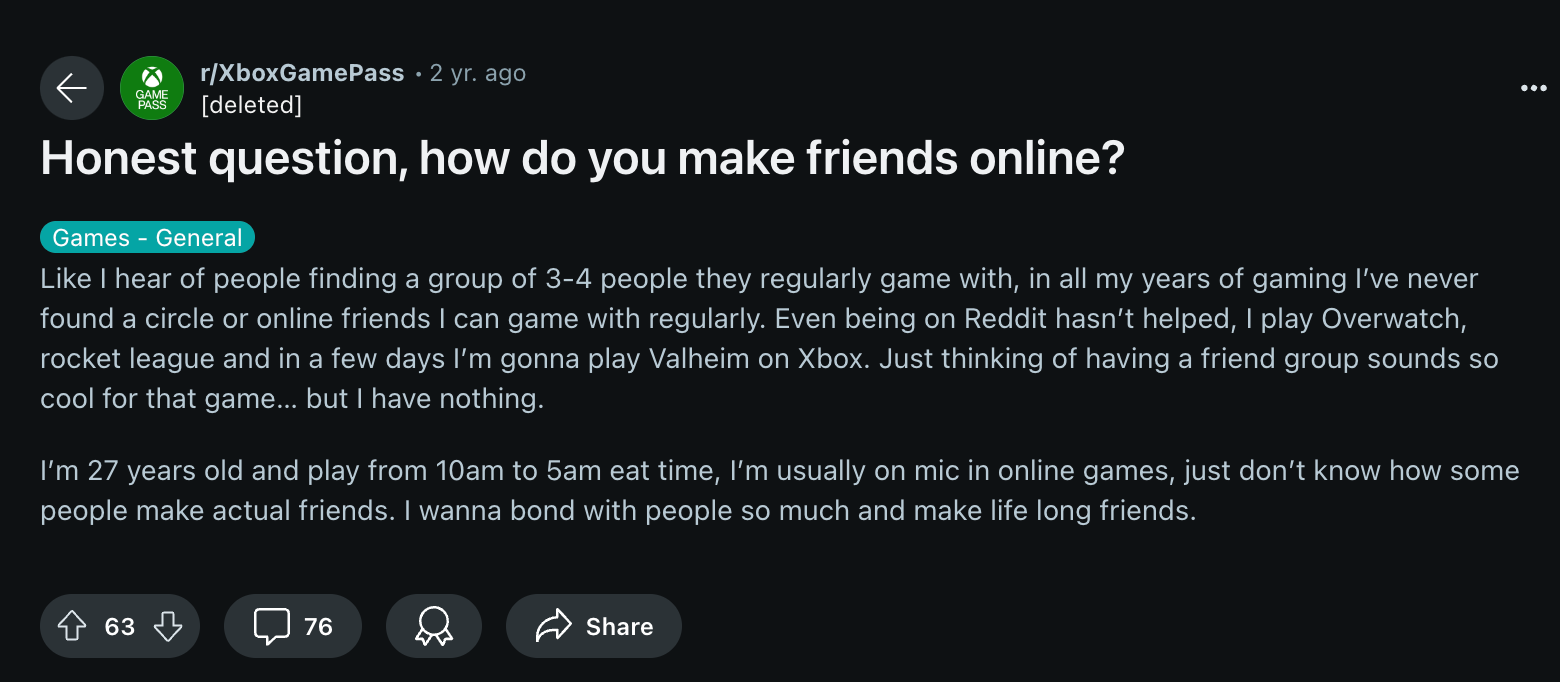
Some of these connections of course materialise online. It’s arguably easier to find like-minded people here, and from all over the world, but only if you know where to look. This could be on a sub-Reddit, Instagram comments, or via a game. But unless you have an intention of meeting up, these connections can feel second rate to those made in person.
The best feature, in my opinion, of a regular third place community, is the organic friendships that build over time. It can start with a smile and small talk, before naturally moving into deeper conversations and eventually, meeting up outside of said third place as real friends. You are likely to meet people you otherwise wouldn’t have crossed paths with, and are exposed to alternative cultures and perspectives that are sub-consciously absorbed.
Conversations are usually the secondary element to any third place. You are probably taking part in an activity that requires some level of focus, or perhaps a group discussion. Either way, it allows individuals to show their personality without a sense of urgency or desperation to form relationships. You know you’ll see each other again, so it’s a “See you next time”, rather than a, “Can I get your Instagram?” and never messaging.
Looking to the future, we’re already seeing the merging of ‘work’ and the ‘third place’ when it comes to co-working spaces, social clubs and wellness spaces (one luxury chain is even called Third Space). Similarly with the home, many new build blocks come with amenities including a common area, cinema room or gym to encourage tenants to socialise beyond their four walls. Perhaps the future is not just more third places, but removing the concept altogether by combining services into one holistic offering.
To finish, I’d love to hear how often you’re using third places by answering the poll below. Feel free to comment with any other thoughts, because Substack is a third place too!
VERBATIM
WHAT IS THE ROLE OF THIRD PLACES TODAY?
STEPHAN LEDAIN - Founder of Eternal Remedy, and Business Psychologist
“Home is where our primary understanding of ourselves first takes shape and where we begin to develop our identity in relation to the world. The workplace is where society suggests how we should function and contribute, basically our role within an economic framework to manage individuals and their different identities in relation to each other. Third spaces, however, are where we explore the freedom of often unspoken stories we wish to be a part of. They're where we learn, grow, and practice the version of ourselves that feels most true.
To me, this makes third spaces the backbone of culture. They're where stories are shared, connections are made, and various backgrounds converge to weave together a chosen identity.”
SHORT READ
CORE BELIEF #8: BRAND COLLABS AREN’T SATURATED, THEY ARE THE STATUS QUO
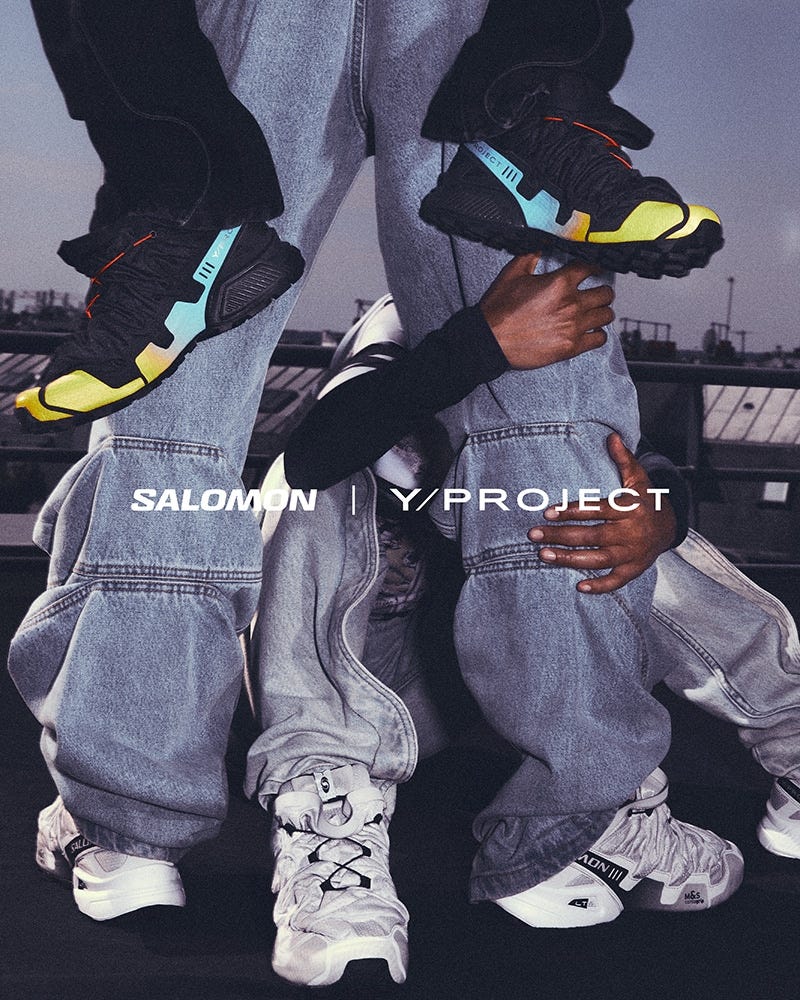
There is a popular discourse that there are too many brand collaborations. However, these collabs are now embedded into brand & marketing strategies. It’s no longer, “Shall we?”, it’s, “When and with who?”
Collabs create hybrid brand worlds which surprise and engage consumers. Well thought-out partnerships (which should not be taken for granted) are an effective way of reaching new audiences with credibility, while retaining a loyal base and selling product.
However, not all collaborations are made equal, and the fatigue sets in when:
No one wants it e.g. Coach x Champion
The brands are too similar e.g. Gucci x Balenciaga
They’ve collaborated many times (and it’s no longer exciting) e.g. Supreme x The North Face
It’s all about finding a sizeable audience overlap with another brand so that your consumers understand why you did it, but not such a big overlap that no one cares. Whether you like them or not, collaborations are here to stay.
MUSIC CORNER
DUA SALEH - I SHOULD CALL THEM
You may recognise Dua Saleh more from playing Cal in the Netflix show, Sex Education, but they are multi-talented. The LA-based, Sudanese-American artist was making music long before their acting debut, with I SHOULD CALL THEM being their first album.
There’s no point roll-calling genres because Saleh touches on so many. It’s best to just enjoy the album for what it is, an atmospheric journey through love and loss against a backdrop of a detioriating planet, pulling us to feel and connect more than analyse every note and lyric: “The album follows two starcrossed lovers who find each other as the world falls apart.”
Don’t forget to follow IN SITU on Instagram @insitu.njd, and check out my website at nicolajdavies.com.